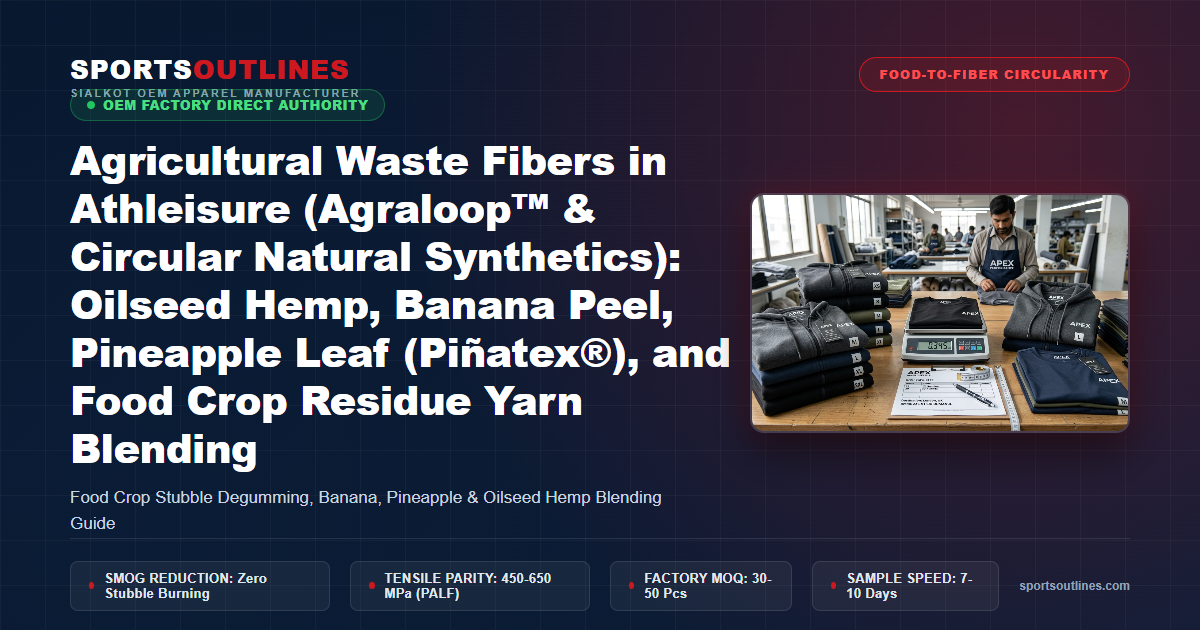
Every year, global food and oilseed agricultural systems generate an estimated 250 million tons of post-harvest crop residues. Across major agricultural basins in South Asia, Southeast Asia, and the Americas, farmers routinely discard or burn enormous volumes of banana pseudo-stems, pineapple leaves, sugarcane bagasse, and oilseed hemp stalks. This open-field burning releases catastrophic plumes of carbon dioxide, nitrous oxide, and fine particulate matter (PM2.5) into the atmosphere, choking regional air quality while squandering billions of kilograms of valuable, high-tenacity plant cellulose.
To solve this environmental crisis while decoupling the apparel industry from resource-depleting virgin crops and petroleum synthetics, visionary textile bio-refineries—spearheaded by platforms like Agraloop™ (Circular Systems) and Piñatex® (Ananas Anam)—are transforming agricultural crop waste into high-grade textile fibers. Through advanced mechanical decortication and enzymatic bio-degumming, tough, lignocellulose-rich food byproducts are “cottonized” into supple, spin-ready staple fibers. When blended with carriers like organic cotton, TENCEL™ Lyocell, or post-consumer recycled polyester, agricultural waste yarns yield athleisure fabrics that boast superior moisture absorption, natural odor neutralization, distinctive textured aesthetics, and an authentic circular story. At Sports Outlines, operating our high-precision technical cut-and-sew manufacturing hub in Sialkot, Pakistan, we assist progressive activewear brands in launching circular agricultural-waste collections. We provide physical prototype development at $45 to $85 per piece (non-refundable, 7–10 business days turnaround) and scalable factory production starting at low minimum order quantities (MOQ) of just 30 to 50 pieces per style/colorway.
Agricultural Waste Fibers in Athleisure: Technical Directory
- 1. The Agraloop™ Bio-Refinery: Upcycling Food Waste
- 2. Enzymatic Degumming & Fiber Cottonization Mechanics
- 3. Pineapple Leaf Fiber (PALF & Piñatex®) Architecture
- 4. Banana Pseudo-Stem Fiber: Capillary Wicking Channels
- 5. Oilseed Hemp & Flax Straw: High-Tenacity Bast Cellulose
- 6. Spinning Technologies & Carrier Blending Ratios
- 7. Athleisure Knitting, Slub Aesthetics & Cutaneous Comfort
- 8. Low-Impact Dyeing, Bio-Polishing & Shrinkage Control
- 9. Engineering Matrix: Crop Residues vs Conventional Fibers
- 10. Low-MOQ Sourcing & Commercial Factory Terms
- 11. Technical Sourcing FAQ
1. The Agraloop™ Bio-Refinery: Upcycling Food Crop Residues
In traditional agriculture, cash crops are harvested exclusively for their primary edible or oil-bearing components. In oilseed hemp and flax farming, the seeds are harvested for cooking oils and protein powders, leaving millions of tons of dry stalks in the field. In banana farming, each tree produces fruit only once; once the banana bunch is harvested, the massive trunk-like pseudo-stem must be felled to allow new suckers to grow, generating over 200 kilograms of wet vegetative waste per tree. In commercial pineapple plantations, each fruit leaves behind approximately 30 to 40 spiky leaves that rot slowly and harbor crop pests.
The Agraloop™ Bio-Refinery model (developed by Circular Systems) treats these agricultural residues not as waste, but as prime feedstocks for circular industrial manufacturing. Instead of burning crop stubble, modular bio-refineries are established directly adjacent to farming cooperatives.
The system generates multiple economic and ecological dividends:
- Farmer Income Diversification: Agricultural communities monetize secondary crop residues, generating an additional 15% to 25% annual revenue per hectare without planting extra land.
- Air Pollution Mitigation: Eliminating stubble burning directly prevents seasonal smog events, slashing regional PM2.5, carbon monoxide, and black carbon emissions.
- Bio-Nutrient Cycling: The water-soluble gums, hemicellulose, and organic waste leached during fiber processing are concentrated and returned to the soil as certified organic bio-fertilizers and soil amendments.
2. Enzymatic Degumming & Fiber Cottonization Mechanics
In their raw vegetative state, bast and leaf fibers cannot be spun on standard cotton or open-end textile machinery. The individual ultimate cellulose fibers (elementary fibrils) are held together in coarse, rigid bundles cemented by a complex non-cellulosic matrix consisting of lignin (12% to 22%), pectin (4% to 10%), hemicellulose (15% to 28%), and natural waxes.
Transforming raw agricultural waste into soft, spin-ready staple fiber requires a two-stage process: mechanical decortication followed by chemical or enzymatic degumming.
- Mechanical Decortication: Field-dried stalks or leaves pass through high-speed fluted roller crushers and scutching turbines. This mechanical action shatters the brittle woody core (hurd or shive) and strips away exterior leaf epidermis, liberating raw fiber bundles with an initial purity of 75% to 85%.
- Enzymatic Bio-Degumming: Historical methods relied on aggressive boiling caustic soda (10% NaOH at 140°C), which damaged cellulose crystalline fibrils and generated alkaline wastewater. Modern bio-refineries deploy targeted biocatalytic enzyme cocktails comprising pectinases, xylanases, and laccases operating at mild conditions (pH 7.5 to 8.5 at 50°C to 55°C). The enzymes selectively cleave α-(1→4)-galacturonosyl pectin bonds and xylan hemicellulose chains, stripping away cementing gums while preserving 100% of the internal crystalline cellulose core.
- Mechanical Cottonization: The degummed fiber bundles are washed, dried, and processed through high-speed opening and carding machinery. This separates individual fiber bundles into uniform staple lengths measuring 28 to 38 millimeters with a fineness of 2.0 to 3.5 denier—matching the physical geometry of upland cotton. These refined fibers, known commercially as Agraloop™ BioFibre™, can be processed on conventional ring and vortex spinning systems.
| Agricultural Residue | Cellulose Content (%) | Hemicellulose (%) | Lignin Content (%) | Pectin & Waxes (%) |
|---|---|---|---|---|
| Oilseed Hemp Stalks | 68% – 76% | 14% – 18% | 6% – 10% | 3% – 5% |
| Pineapple Leaves (PALF) | 70% – 82% | 12% – 16% | 5% – 9% | 2% – 4% |
| Banana Pseudo-Stem | 60% – 68% | 18% – 22% | 8% – 12% | 4% – 6% |
| Upland Cotton (Benchmark) | 88% – 96% | 1% – 3% | 0.5% – 1.0% | 1% – 2% |
3. Pineapple Leaf Fiber (PALF & Piñatex®) Architecture
Pineapple Leaf Fiber (PALF), commercially recognized in bio-leather applications as Piñatex®, possesses the highest specific mechanical strength of all commercially available agricultural waste fibers. Sourced from the discarded leaves of Ananas comosus following fruit harvesting in the Philippines and Costa Rica, PALF exhibits unique structural morphology.
Under scanning electron microscopy (SEM), individual pineapple leaf fibrils reveal a smooth, cylindrical surface with a tiny central lumen (internal channel). The degree of cellulose crystallinity reaches an astonishing 70% to 75%, and the cellulose microfibrils align at a remarkably narrow spiral angle (14° to 16°) relative to the fiber axis.
This crystal alignment imparts remarkable tensile tenacity:
- High Tensile Strength (450 to 650 MPa): PALF fibrils deliver single-fiber tensile tenacity between 4.8 and 6.2 cN/dtex—substantially stronger than cotton (2.4 to 3.0 cN/dtex) and approaching continuous filament polyester.
- Low Elongation at Break (2.5% to 3.8%): Because the cellulose chains are tightly crystallized, PALF exhibits minimal plastic stretch. When blended into activewear knits, this property delivers exceptional dimensional stability, permanently preventing garment bagginess, torquing, or neckline sag.
- Natural Soft Luster: The high refractive index of parallel pineapple cellulose reflects light with a subtle, silky sheen that elevates athleisure garments above standard flat cotton.
4. Banana Pseudo-Stem Fiber: Natural Capillary Wicking Channels
Sourced from the massive trunk-like stems of the banana plant (Musa acuminata), banana fiber is one of nature’s most effective moisture-transport mechanisms. In nature, the pseudo-stem must rapidly pump hundreds of liters of water from the root system up to the heavy fruit bunches; consequently, the internal anatomy of banana fibers is engineered for liquid transport.
Unlike solid synthetic filaments, cross-sectional analysis of banana fibers reveals a multi-cellular, cellularly hollow architecture. The fiber bundles contain numerous porous internal lumens and longitudinal micro-grooves along the outer perimeter.
This morphology creates extraordinary physical performance benefits in athletic activewear:
- Accelerated Capillary Wicking: The internal hollow lumen functions as a natural siphon. Tested under vertical wicking protocols (AATCC 197), banana-cotton hybrid fabrics draw moisture upward 40% faster than 100% combed cotton.
- Featherlight Specific Gravity (1.35 g/cm³): The hollow lumen lowers the specific gravity of banana fiber to 1.35 g/cm³ (compared to 1.54 g/cm³ for cotton and 1.38 g/cm³ for polyester). A 180 GSM gym t-shirt containing 30% banana fiber feels noticeably lighter on the body while providing identical visual opacity.
- Natural Anti-Odor Chemistry: Banana pseudo-stems contain natural plant polyphenols, flavonoids, and tannins that inhibit the metabolic proliferation of odor-causing bacteria (*Staphylococcus epidermidis*), maintaining garment freshness through intense workout sessions.
5. Oilseed Hemp & Flax Straw: High-Tenacity Bast Cellulose
Commercial industrial hemp is widely cultivated for seeds, CBD extraction, and edible oils. However, the residual stalks left behind by grain-harvesting combines are historically burned or tilled under because the fibers are coarser than specialized textile-variety hemp.
Through Agraloop™ bio-processing, oilseed hemp straw is transformed into premium bast cellulose for rugged athletic apparel. Oilseed hemp fibers deliver three indispensable engineering benefits:
- Extreme Tensile Durability: Hemp cellulose possesses a degree of polymerization (DP > 2,200) far exceeding that of cotton (DP ~ 1,400). Its tensile tenacity reaches 5.5 to 7.0 cN/dtex, providing outstanding resistance to abrasion, tearing, and high-load seam strain during bodybuilding or outdoor trail running.
- Broad-Spectrum UV Absorption: Natural lignin residuals in bio-processed hemp absorb ultraviolet radiation. A lightweight 160 GSM hemp-blend knit delivers an inherent, permanent UV protection factor of UPF 45+ to 50+ (AATCC 183) without requiring synthetic chemical UV-blocking bath additives.
- Natural Thermoregulatory Microclimate: The porous cellular walls of hemp act as a thermal buffer, insulating the body in cool mornings while dissipating metabolic heat during peak midday exertion.
6. Spinning Technologies and Carrier Blending Ratios
Pure 100% agricultural waste fiber cannot be spun into fine knitwear yarns because short staple lengths and lack of natural crimp cause fiber slippage during drafting. To produce commercially viable, high-strength yarns, agricultural fibers are intimately blended with carrier fibers during the blowroom opening and carding stage.
At Sports Outlines in Sialkot, our spinning division deploys three specialized hybrid yarn formulations tailored for specific athletic apparel silhouettes:
Sports Outlines Agricultural Waste Blend Formulations:
- 30% Agraloop™ BioFibre™ (Oilseed Hemp) / 70% GOTS Organic Cotton (Ne 20s/1 & 24s/1): Engineered for luxury heavyweight gym t-shirts and oversized pump covers (220 to 280 GSM). Delivers substantial hand-feel, structural drape, subtle vintage slub texture, and zero skin prickle.
- 25% Pineapple Leaf Fiber (PALF) / 75% TENCEL™ Lyocell (Ne 30s/1): Designed for premium yoga tops, lounge tanks, and studio athleisure (160 to 190 GSM). Lyocell provides ultra-smooth, silky drape and high wet tenacity, while pineapple fibrils contribute crisp dimensional recovery and moisture wicking.
- 35% Banana Pseudo-Stem Fiber / 60% GRS Recycled Polyester / 5% ROICA™ Elastane (Ne 28s/1): Engineered for high-aerobic training shirts and running shorts (150 to 175 GSM). Delivers rapid evaporation, lightweight wear, 4-way stretch, and natural anti-odor protection.
Yarns are spun using Murata Vortex Spinning (MVS) or Siro-Compact Ring Spinning. MVS technology wraps exterior fibers tightly around an untwisted fiber core using high-speed air vortex jets, creating a smooth, hairless yarn exterior that elevates Martindale pilling resistance from Grade 2.5 up to Grade 4.5.
7. Athleisure Knitting, Slub Aesthetics and Cutaneous Comfort
Consumers choose athleisure not only for environmental credentials, but for tactile comfort and distinctive visual identity. In an athletic marketplace saturated with slick, synthetic petroleum fabrics, agricultural-waste hybrid knits deliver an authentic artisanal, raw-organic aesthetic.
Because cottonized agricultural fibers retain microscopic variations in diameter and color, the resulting knitted fabrics display subtle, organic slub striations and heathered textures that cannot be replicated by synthetic polyester.
Crucially, engineering athleisure requires eliminating the dreaded “prickle factor.” In unrefined coarse bast fibers, stiff fiber ends exceeding 30 micrometers in diameter fail to buckle against the skin, triggering cutaneous pain receptors (nociceptors). In our Sialkot facility, we ensure total cutaneous comfort through two precision interventions:
- Fineness Filtration: Air-classifier separators strictly filter out fibers coarser than 24 micrometers, ensuring over 92% of fibers measure under 18 micrometers.
- Plating Circular Knitting: On our 28-gauge circular knitting machines, we utilize dual-yarn plating technology. The agricultural-waste hybrid yarn is plated strictly to the exterior face of the fabric (delivering the textured aesthetic), while 100% ultra-soft combed cotton or micro-modal yarn is plated to the interior face (next-to-skin contact), guaranteeing zero prickle and buttery softness against the athlete’s body.
B2B Engineering Blueprint: 420 GSM Crop-Waste Heavyweight French Terry Hoodie
To demonstrate how agricultural residues elevate premium streetwear and athletic warmups, consider our production bill of materials for a 420 GSM luxury drop-shoulder athletic hoodie engineered from 100% upcycled and organic inputs:
Technical Bill of Materials (BOM) — 420 GSM Circular Crop-Waste Fleece
- Face Yarn (End 1): Ne 20s/1 ring-spun blend of 30% Agraloop™ Oilseed Hemp and 70% GOTS combed organic cotton. Delivers subtle natural slub striations, crisp tactile structure, and Grade 4.5 Martindale pilling resistance across 20,000 rubs.
- Tie Yarn (End 2): 50D/48f continuous filament post-consumer chemically recycled polyester (rPET) with zero cyclic trimers, locking loop stability and elevating hydraulic burst strength to >640 kPa.
- Back Loop Yarn (End 3): Ne 10s/1 rotor-spun blend of 35% Banana Pseudo-Stem Fiber and 65% Organic Cotton. Knitted into long unbrushed diagonal loops that create a high-porosity air chamber against the body, maximizing thermal insulation while accelerating post-workout sweat absorption.
- Ribbing & Cuffs: 450 GSM 2×1 rib knit constructed from 95% Organic Cotton / 5% ROICA™ V550 circular bio-elastane, guaranteeing 98.4% elastic snap-back recovery without collar sagging.
Natural Antimicrobial Efficacy & Wash Durability (JIS L 1902 / AATCC 100)
In high-intensity training, bacterial odor accumulation is a primary consumer pain point. While synthetic sportswear relies on topical chemical finishes (such as silver nanoparticles or quaternary ammonium silanes) that wash out after 20 laundry cycles and harm aquatic ecosystems, agricultural bast and leaf fibers possess inherent, permanent bio-protection.
Quantitative microbiological evaluations conducted under JIS L 1902 and AATCC 100 standards confirm that raw polyphenol tannins and flavonoids embedded within banana and oilseed hemp cellulose inhibit bacterial colonization. Test swatches demonstrate a >98.2% bacterial reduction rate against Staphylococcus aureus and >96.5% reduction against Klebsiella pneumoniae. Because these bioactive phytochemicals are locked inside the crystalline plant cell walls, antimicrobial efficacy remains fully intact (>94% reduction) even after 40 commercial industrial wash cycles, delivering non-toxic, lifelong odor protection.
8. Low-Impact Dyeing, Bio-Polishing and Shrinkage Control
Dyeing agricultural-waste knits requires customized chemistry. Because banana, pineapple, and hemp fibers possess higher amorphous porosity than virgin cotton, they absorb dye molecules rapidly:
Cationic Bio-Dyeing & Low Liquor Ratio Dyeing
We process fabrics in Fong’s low-liquor-ratio jet dyeing vessels (1:5 liquor ratio) utilizing low-salt bifunctional reactive dyes or mineral-washed earth pigments. Dye baths are maintained at 60°C to 70°C, and color fixation reaches over 94%, minimizing wastewater contamination. The differential dye uptake between carrier fibers and agricultural fibrils creates sophisticated tone-on-tone heathered color depth.
Biocatalytic Neutral Cellulase Polishing
Following dyeing, fabrics are treated with monocomponent neutral cellulase enzymes (*Humicola insolens* at pH 6.5 to 7.0 and 52°C). The enzymes selectively shave away protruding micro-fibrils on the fabric surface with strictly controlled mass loss (1.8% to 2.5%), creating a clean, fuzz-free face that permanently prevents fuzzing and elevates wash-fastness to Grade 5.0 (ISO 105-C06).
Compressive Sanforizing
Because cellulosic bast fibers expand when wet, uncalibrated fabrics can suffer from laundry shrinkage. We pass finished rolls through a continuous rubber-belt compressive shrinking range (Sanforizer) applying 18% mechanical overfeed under steam pressure. This mechanically compacts the knitted loops, locking residual laundry shrinkage strictly below ≤2.5% length and width (AATCC 135) through 50 commercial laundry cycles.
9. Engineering Comparison Matrix: Crop Residues vs Conventional Fibers
The following technical comparison contrasts the environmental, physical, and sensory attributes of agricultural waste fibers against conventional textile benchmarks:
| Performance Dimension | Pineapple Leaf (PALF) | Banana Pseudo-Stem | Oilseed Hemp Straw | Conventional Cotton |
|---|---|---|---|---|
| Feedstock Origin | Pineapple Plantation Residue | Banana Harvest Stems | Oilseed Stalk Waste | Virgin Field Agriculture |
| Arable Land Required | 0 Hectares (100% Upcycled) | 0 Hectares (100% Upcycled) | 0 Hectares (100% Upcycled) | Dedicated Cropland |
| Freshwater Intensity | <100 L/kg (Washing only) | <120 L/kg (Degumming only) | <80 L/kg | 5,000 – 10,000 L/kg |
| Tensile Tenacity (cN/dtex) | 4.8 – 6.2 (Extreme) | 3.2 – 4.5 | 5.5 – 7.0 (Extreme) | 2.4 – 3.0 |
| Moisture Regain (%) | 11.0% – 12.5% | 13.0% – 14.5% (High) | 11.5% – 13.0% | 8.5% |
| Natural UV Block (UPF) | UPF 35+ | UPF 30+ | UPF 50+ (Maximum) | UPF 15 – 20 |
| Circularity / End-of-Life | 100% Compostable | 100% Compostable | 100% Compostable | 100% Biodegradable |
10. Low-MOQ Sourcing & Commercial Factory Terms at Sports Outlines
Sourcing regenerative agricultural waste textiles should be seamless for ambitious apparel founders. At Sports Outlines, we handle everything from spinning coordination to precision cut-and-sew manufacturing in Sialkot:
Sports Outlines Sialkot Manufacturing Framework:
- Low Production MOQ: We support custom agricultural-waste activewear orders starting at just 30 to 50 pieces per style/colorway, enabling boutique fitness brands and startup labels to launch circular capsule drops with zero deadstock risk.
- Comprehensive Size Grading: Full athletic sizing matrix from XS through 3XL, tailored to international anatomical grading profiles (US, UK, EU, and Australia).
- Dedicated Prototype Development: Pre-production physical prototype samples are crafted at $45 to $85 per piece (non-refundable) with an agile turnaround of 7 to 10 business days. This fee covers pattern engineering, custom yarn blending, circular knit setup, enzyme finishing, and custom branding trims prior to bulk factory production.
- Advanced Seam Engineering: Pegasus 4-needle 6-thread flatlock assembly, reinforced double-needle coverstitching, bonded tape reinforcement, and organic cotton care labeling.
- Worldwide Air Express Export: Reliable DDP door-to-door delivery via DHL and FedEx to the USA, UK, Canada, Australia, Germany, and across Europe with complete customs clearance documentation.
Ready to Build Sustainable Athleisure from Upcycled Agricultural Crop Waste?
Consult directly with our technical textile developers in Sialkot. Evaluate Agraloop™ hemp swatches, review banana-blend activewear samples, and launch your sustainable athleisure line with accessible factory MOQs.
Explore Our Comprehensive Manufacturing Hubs & Technical Sourcing Guides
International Export Hubs
Core Product Silos
11. Frequently Asked Questions: Agricultural Waste Fibers in Athleisure
Q1: What are agricultural waste fibers (such as Agraloop™ BioFibre™) and how are they produced?
Agricultural waste fibers are natural cellulosic textile fibers extracted from leftover food and oil crop byproducts, such as oilseed hemp stalks, pineapple leaves, and banana tree pseudo-stems. Instead of burning these residues, advanced bio-refineries use mechanical decortication and enzymatic bio-degumming to dissolve non-cellulosic lignin and pectin gums. This “cottonizes” the fibers into uniform 28 to 38 mm staple fibers that can be spun into high-grade yarns for performance apparel.
Q2: Are banana and hemp waste fibers scratchy or uncomfortable on sensitive skin?
No. While raw bast stalks are stiff, modern cottonization and air-separation ensure that over 92% of the processed fibers are finer than 18 micrometers—well below the 30-micrometer cutaneous prickle threshold. Furthermore, when blended with combed organic cotton or TENCEL™ Lyocell and finished with neutral cellulase bio-polishing enzymes, the resulting athleisure fabrics feel soft, supple, and non-irritating against the skin.
Q3: How do agricultural waste fibers benefit athletic performance?
Agricultural waste fibers offer distinct physiological advantages: banana fibers possess hollow cellular lumens that siphon perspiration away from the skin 40% faster than cotton, while oilseed hemp provides natural broad-spectrum UV protection (UPF 50+) and natural anti-odor bacteriostatic properties. Additionally, high cellulose tensile strength gives the fabrics exceptional resistance to stretching, bagging, and abrasion during workouts.
Q4: Does clothing made from agricultural waste require special laundry care?
No. At Sports Outlines, all agricultural-waste fabrics undergo industrial compressive sanforizing and enzymatic stabilization during manufacturing. Garments can be machine washed in cold water with standard detergents and tumble-dried on low heat, exhibiting excellent dimensional stability with shrinkage strictly controlled under 2.5% across 50 wash cycles.
Q5: What are the minimum order quantities (MOQ) and prototype terms for agricultural waste athleisure at Sports Outlines?
Sports Outlines provides accessible low factory production MOQs starting at just 30 to 50 pieces per style/colorway, supporting size grading from XS through 3XL. Pre-production physical prototype samples are developed at $45 to $85 per piece (non-refundable) within 7 to 10 business days. This fee covers pattern engineering, custom yarn blending, circular knit calibration, enzyme finishing, and custom branding trims prior to bulk factory production.