Direct Manufacturer Answer: How to Manufacture Custom Short-Sleeve BP Cage Jackets
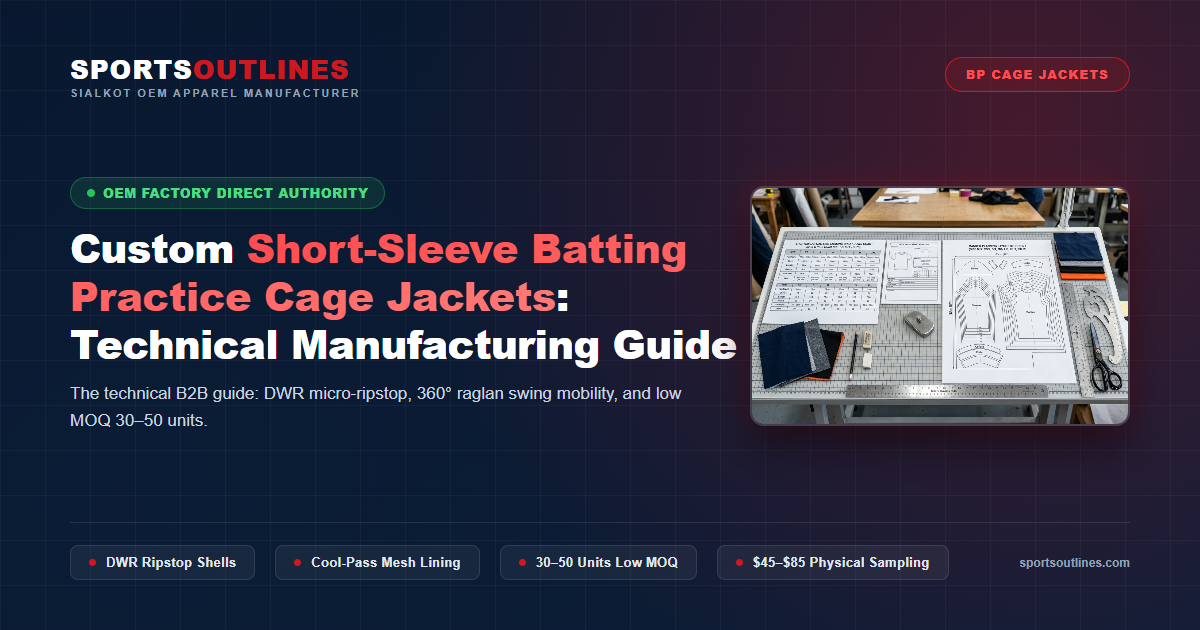
Manufacturing custom short-sleeve batting practice (BP) cage jackets and baseball windshirts requires specialized athletic outerwear engineering that balances wind resistance, light drizzle protection, and completely uninhibited rotational hitting mobility. High-performance cage pullovers utilize 110–135 GSM micro-polyester ripstop or woven taslan shells treated with C6 Durable Water Repellent (DWR) finish and windproof polyurethane (PU) mist coatings, bonded to an interior 75–90 GSM breathable polyester athletic pinhole mesh lining to prevent fabric cling against sweaty base layers. Critical pattern requirements include a 360-degree rotational raglan sleeve cut, underarm stretch gussets, an athletic V-neck ribbed collar or quarter-zip placket with chin guard, side hand-warmer zippered pockets, and an adjustable shock-cord toggle waistband. Factory direct low MOQ in Sialkot, Pakistan starts at 30 to 50 pieces per style/colorway with mixed adult and youth sizing. Physical pre-production prototype samples cost $45 to $85 per custom piece completed in 7 to 10 business days.
- Shell Fabric: 115–130 GSM 100% Micro-Polyester Ripstop or Hydrophobic Dobby Weave with DWR C6 treatment.
- Lining Fabric: 85 GSM 100% Polyester Cool-Pass Micro-Mesh Lining for anti-cling moisture evacuation.
- Biomechanical Pattern: Raglan cut shoulder with underarm spandex gussets for full 360° rotational torso torque.
- Collar & Placket: 1×1 Polyester/Spandex anti-pilling ribbed V-neck or YKK quarter-zip lock slider with storm flap.
- Decoration Capabilities: Tackle twill chest lettering, 3D raised silicone logos, laser-etched badges, and all-over dye sublimation.
- Factory Direct Low MOQ: 30–50 jackets per team design across sizing S to 4XL (mixed size runs).
- Pre-Production Sampling: $45–$85 per custom jacket in 7–10 days (strict zero credit/refund policy).
- Direct Sourcing Contact: WhatsApp factory direct at +92 316 7932595 or sportsoutlines.com.
In modern baseball and fastpitch softball, the short-sleeve batting practice cage jacket—often called the BP windshirt, cage pullover, or short-sleeve batting jacket—is the definitive garment of pre-game preparation. Worn during morning batting practice, infield-outfield warmups, cage sessions, and bullpen training, this specialized garment must accomplish what standard outerwear cannot: maintain upper-body core warmth and block biting spring winds without encumbering a hitter’s hands, wrists, or rotational follow-through.
Standard long-sleeve jackets cause friction at the wrists, bunch around the elbows, and restrict high-velocity bat speed. Conversely, standard short-sleeve jerseys offer zero wind protection during chilly April doubleheaders or night games. The short-sleeve batting practice cage jacket bridges this critical gap. However, producing a true pro-grade BP jacket requires sophisticated textile sourcing, hydrophobic coatings, ergonomic pattern engineering, and multi-technique decoration methods that survive hundreds of high-speed torque cycles.
At Sports Outlines in Sialkot, Pakistan, our outerwear and diamond sports manufacturing floor engineers custom short-sleeve cage pullovers for high school athletic programs, NCAA collegiate baseball teams, travel ball organizations, and pro independent leagues worldwide. As an export manufacturer supplying brands across the USA, UK, Canada, and Australia, we provide brand directors, teamwear distributors, and equipment managers with this comprehensive technical B2B manufacturing guide. Below, we break down textile science, shell coatings, kinetic sleeve engineering, decoration methods, sizing specs, wholesale manufacturing margins, and factory direct sourcing protocols.
1. The Biomechanical Demands of the Batting Practice Silhouette
A baseball or softball swing is one of the most explosive, multi-planar movements in competitive sports. Within approximately 150 milliseconds, a hitter transitions from a static stance to violent hip rotation, thoracic spine extension, shoulder internal rotation, and wrist snap. When an athlete wears an improperly tailored jacket during batting practice, rigid woven fabric across the back creates tension resistance, altering the swing path, shortening extension, and contributing to muscle fatigue.
To engineer a functional short-sleeve cage pullover, garment architects must address four distinct mechanical stress zones:
- Thoracic Back Expansion: During the loading phase and forward stride, the scapulae retract and broaden. Standard set-in sleeves pull the fabric taut across the shoulder blades. High-grade cage jackets solve this through articulated raglan patterning or action-back inverted pleats lined with stretch mesh.
- Overhead Arm Elevation & Follow-Through: As the bat travels through the hitting zone to full high finish, the lead and trail shoulders elevate above 120 degrees. If the armhole scye is cut too low or boxy, lifting the arms causes the entire bottom hem of the jacket to ride up past the beltline, pulling out tucked undershirts and distracting the player.
- Forearm & Bicep Clearance: Long sleeves gather at the wrist, soak up pine tar or grip spray, and add drag to hand speed. Truncating the sleeve just above the elbow joint (a tailored 9-inch to 11-inch inseam) provides complete forearm freedom while retaining thermal core insulation around the pectoral, deltoid, and rotator cuff muscles.
- Thermal Regulation in Humid Batting Cages: Batting cages and indoor hitting tunnels are notoriously humid environments. If a windshirt traps radiant body heat without continuous convective venting, the hitter’s core overheats rapidly, leading to perspiration pooling inside the garment. Controlled ventilation panels are an absolute engineering necessity.
2. Textile Engineering: Shell Fabrics, Coatings & Anti-Cling Linings
The selection of outer shell textiles and inner linings determines whether a cage jacket feels like a high-tech athletic shell or a noisy, sweltering plastic windbreaker. In baseball manufacturing, shell fabrics must satisfy three rigorous criteria: low surface friction (so the bat barrel or hands do not snag on loose folds), noiseless deflection (avoiding distracting crinkling sounds as the hitter focuses on pitch release), and high tensile tear resistance against metal chain-link dugout fencing.
A. Micro-Polyester Ripstop (115–125 GSM)
Woven from 50-denier high-filament micro-polyester yarns, ripstop weaves incorporate reinforced cross-hatch grid patterns every 3mm to 5mm. If a player snags the jacket on an errant fence wire or cleat spike, the tear is physically arrested at the nearest reinforced cross-thread, preventing catastrophic fabric failure. The fabric possesses an ultra-soft hand feel, matte sheen, and exceptional wind-deflecting density (air permeability below 12 CFM).
B. Hydrophobic Woven Taslan (125–135 GSM)
Taslan is an engineered woven nylon or polyester fabric manufactured using an air-jet texturing process. This creates a textile with the rugged durability, windproof qualities, and abrasion resistance of technical outerwear, but with the tactile texture, softness, and matte visual appearance of natural spun cotton. Taslan is the premier choice for collegiate and elite travel ball programs seeking a structured, heavyweight drape that resists deep abrasion from batting tee uprights and equipment bags.
C. C6 Durable Water Repellent (DWR) & Breathable Polyurethane Mist Backing
To defend athletes against sudden spring showers and heavy morning dew, the exterior shell fabric undergoes a foulard pad-application of eco-compliant C6 fluorocarbon DWR finish. Water beads up on contact and rolls off without penetrating into the fibers (spray rating: 90/100 per AATCC 22). On the reverse side of the shell, we apply a micro-porous polyurethane (PU) mist coating (600mm to 1,000mm hydrostatic head). This invisible layer completely blocks horizontal wind chill while permitting water vapor molecules from metabolic sweat to escape outward.
D. Cool-Pass Pinhole Athletic Mesh Lining (80–90 GSM)
The biggest flaw in cheap, unlined windshirts is “sweat cling”—the clammy, suction-like adhesion of cold nylon shell against the athlete’s bare arms or damp jersey. At Sports Outlines, every custom cage jacket features a fully suspended interior lining of 85 GSM 100% Polyester Cool-Pass micro-mesh. The three-dimensional diamond pinhole structure creates an internal micro-climate airspace between the shell and player’s body, maintaining continuous ventilation and effortless slip-on/slip-off transitions.
3. Silhouette Architectures: Crewneck, Ribbed V-Neck vs. Quarter-Zip
Brand clients and team dealers can customize the collar and closure configuration based on competitive climate and brand aesthetics. We engineer two primary silhouettes across our Sialkot manufacturing floor:
A. The Classic V-Neck Pullover (Heritage MLB Tradition)
The V-neck pullover is the timeless aesthetic of Major League batting cages. The collar is finished with a heavy 1×1 yarn-dyed flat-knit ribbing (95% polyester, 5% elastane) featuring custom knitted contrast stripe patterns. Key manufacturing advantages include:
- Zero Metal / Plastic Hardware: No zipper teeth to break or catch on chest protectors, chin straps, or batting gloves.
- Elastic Neck Expansion: Easily stretches over batting helmets, caps, and sunglasses during frantic pre-game lineup changes.
- Unrestricted Choking / Laryngeal Comfort: Open V-geometry sits flush against the clavicle, preventing collar friction when turning the head toward the pitching mound.
B. The Quarter-Zip Technical Windshirt (Modern Collegiate Style)
The quarter-zip silhouette offers superior thermal adaptability. Built with an upright stand collar (2.25 inches) that guards against chill wind blowing down the neck, it incorporates:
- YKK #5 Reverse Coil Zipper: Inverted zipper coils present a clean, water-shedding flat profile that will not scratch the chin or snag on chest logos.
- Soft Tricot Zipper Garage (Chin Guard): A dedicated fabric fold at the top of the placket isolates the zipper pull from the athlete’s neck and beard.
- Internal Wind Barrier Flap: A continuous 1-inch woven storm flap behind the zipper teeth prevents cold crosswinds from penetrating the closure seam.
4. Decoration Engineering: Tackle Twill, Sublimation & 3D Silicone
Decorating lightweight woven outerwear requires specialized machinery. Unlike heavy fleece or knit jerseys, thin 120 GSM ripstop will pucker, bubble, or tear if embroidered with excessive needle penetration density. Sports Outlines implements three precision decoration technologies specifically calibrated for woven athletic shells:

A. Lightweight Laser-Cut Tackle Twill with Zigzag Stitching
For traditional collegiate and club programs, tackle twill delivers an unmatched premium, three-dimensional look on the center chest. To prevent garment puckering, we use featherweight single-layer or two-layer polyester twill pre-cut on CO2 automated laser cutting beds with heat-sealed edges. The twill is bonded with permanent thermoplastic adhesive before our multi-head Tajima embroidery machines secure the perimeter with tight 1.5mm zigzag stitch borders at 800 RPM.
B. High-Definition All-Over Dye Sublimation
Travel ball clubs and modern apparel brands frequently demand complex geometric camo patterns, digital gradients, and multi-color sleeve graphics. Because our 100% micro-polyester ripstop shells accept sublimation inks at 205°C (401°F), we produce all-over printed cage jackets using Italian Kiian water-based disperse dyes. Sublimation adds zero weight, does not restrict breathability, and will never crack, peel, or fade across years of ultraviolet sun exposure and laundry cycles.
C. High-Density 3D Silicone Heat Transfers
For contemporary minimalist branding (such as sleeve emblems, rear neck badges, and left chest corporate marks), we apply matte or gloss 0.6mm to 1.0mm raised silicone badges. Heat-applied at 155°C with 4.5 bar pneumatic pressure, these silicone emblems flex effortlessly with fabric stretch and withstand commercial laundry testing without peeling.
5. Functional Hardware & Ergonomic Pocket Engineering
Professional baseball coaches and athletes interact with their cage jackets constantly between innings and batting rounds. Integrating functional hardware ensures practical utility on the diamond:
- Concealed Side Seam Zipper Pockets: Two front side pockets built into the lateral princess seams with invisible reverse-coil zippers. Pockets are lined with 100% polyester brushed micro-fleece to keep pitchers’ and hitters’ throwing hands warm between cage rotations. Large enough to store a batting glove, pitch caller card, or smartphone.
- Dual Hem Shock-Cord Barrel Toggles: An enclosed elastic shock cord runs through the bottom hem tunnel. Two mini barrel toggles recessed inside the interior side seams allow the player to tighten the jacket around the waist, preventing updrafts without cords dangling outside where they could catch on bats.
- Side Vent Zippers (Optional Pitching Feature): For pitchers and infielders who throw bullpens while wearing cage pullovers, we can incorporate a 6-inch side seam expansion zipper along the right or left hip. Unzipping this vent allows the jacket hem to expand during extreme stride-landing foot plant.
- Rear Scapula Flap Vents: A horizontal storm vent across the upper shoulder blades backed with high-ventilation athletic mesh lets heat escape while preventing rainwater from entering.
6. Complete Size Grading & Athletic Fit Specifications
A batting practice cage jacket must accommodate layering. Athletes regularly wear a compression undershirt and an official game jersey underneath their pullover. Therefore, patterns must feature an athletic outerwear grade—slightly more generous in the chest and armholes than a standard t-shirt, yet streamlined enough to avoid baggy fabric interference.
7. Quality Assurance Protocols: Hydrostatic, Seam Slippage & AQL 2.5
At Sports Outlines, technical outerwear undergoes strict four-stage quality assurance before packaging. Defective outerwear damages brand reputations quickly if seams fray under rotational strain or zipper sliders fail during a championship tournament.
- Raw Woven Fabric Inspection (ASTM 4-Point System): All imported micro-ripstop and taslan rolls are examined on backlit inspection frames. Fabric bolts containing more than 20 defect points per 100 square yards (such as yarn slubs, dye streaks, or uneven coating) are rejected before laser pattern cutting.
- Seam Slippage & Tensile Testing (ASTM D434 / ISO 13936): Woven fabrics can suffer from seam slippage when tension causes warp threads to shift away from weft threads. We calibrate industrial 5-thread overlock and safety-stitch machines with 110-gauge ballpoint needles and Tex-40 bonded polyester core thread, guaranteeing a minimum seam tensile strength of 220 Newtons across all stress points.
- Hydrostatic Water Column Testing (AATCC 127): Every production dye lot is tested under water column pressure to certify that DWR and PU mist coatings withstand a minimum of 800mm to 1,200mm water pressure without surface seepage.
- Final AQL 2.5 Inspection & Metal Detection: Every completed jacket is audited under ISO 2859-1 AQL 2.5 standards for dimensional accuracy (±0.5 inches), stitch density (8–10 stitches per inch), decoration alignment, and passes through a 9-point conveyorized digital needle detector to ensure zero broken needle fragments remain embedded in the garment.
8. B2B Wholesale Unit Economics & Profit Margins
For independent sportswear brands, custom uniform dealers, and collegiate suppliers, short-sleeve batting practice cage jackets offer remarkable profit margins. In retail sports catalogs (such as Rawlings, Mizuno, Nike, and Easton), branded short-sleeve cage pullovers retail between $55.00 and $85.00 each. Sourcing direct from our Sialkot manufacturing floor delivers exceptional unit economics:
9. Sourcing Sialkot: Low MOQ 30–50 Units, Physical Sampling & Freight
Most legacy Asian outerwear manufacturers demand prohibitive minimum order quantities of 500 to 1,000 units per style, making it impossible for independent team dealers or localized travel ball clubs to launch custom cage jacket lines. Sports Outlines is structured specifically to serve growing sports brands with agile, low-barrier production terms:
- Factory Direct Low MOQ: We accept initial production runs starting at just 30 to 50 pieces per style/colorway, allowing full freedom to mix adult and youth sizes (e.g., 5 YL, 10 AS, 15 AM, 12 AL, 8 AXL).
- Transparent Pre-Production Physical Sampling: Before greenlighting bulk production, we build complete physical prototype samples for $45 to $85 per piece (depending on tackle twill and hardware complexity). Samples are finished and dispatched within 7 to 10 business days via DHL or FedEx Express. (Note: Sports Outlines maintains a strict zero credit/refund policy on sample fees; this fee covers dedicated CAD pattern development, custom dye calibration, and machine setup time).
- Streamlined Production & Air Freight: Bulk orders are completed within 18 to 24 business days following sample approval. We provide door-to-door DDP (Delivered Duty Paid) air freight reaching the US, UK, Canada, and Europe in 4 to 6 business days, handling all customs clearance and documentation.
Ready to Launch Custom Short-Sleeve Batting Practice Cage Jackets?
Connect directly with our master pattern engineers in Sialkot, Pakistan. Receive customized CAD mockups, exact textile swatch options, and transparent factory-direct pricing within 24 hours.
Frequently Asked Questions (B2B Sourcing Guide)
What is the advantage of a short-sleeve cage jacket over a long-sleeve dugout jacket?
Short-sleeve cage jackets eliminate fabric bunching around the wrists, prevent sleeves from absorbing bat grip wax or pine tar, and allow free wrist snapping during high-velocity swings while retaining essential core warmth around the chest, back, and rotator cuff muscles.
Can short-sleeve BP cage jackets be fully sublimated with all-over custom graphics?
Yes. Our 100% micro-polyester ripstop shells accept Italian Kiian dye sublimation at 205°C, allowing full-body custom camouflage, digital color gradients, and complex club graphics that never crack, peel, or compromise breathability.
What is your factory low MOQ for custom short-sleeve batting practice jackets?
Our factory direct low MOQ is 30 to 50 pieces per style/colorway, with complete flexibility to mix adult and youth sizes across your order roster.
How much does a physical pre-production prototype sample cost?
Pre-production prototype samples cost $45 to $85 per piece depending on decoration complexity (such as multi-layer tackle twill or custom knit ribbing), completed and dispatched in 7 to 10 business days. We maintain a firm zero credit/refund policy on sample fees.
How should cage jackets be sized to allow wearing over game uniforms?
Our patterns incorporate an athletic outerwear grading allowance, engineered with 3 to 4 inches of extra chest ease beyond standard body circumference. Players can order their standard jersey size and comfortably layer over undershirts and full-button game jerseys.
Explore Related Diamond & Teamwear Technical Guides:
- Custom Baseball Dugout Jackets & Batting Cage Pullovers Guide
- Custom Full-Button Baseball Jerseys: Tackle Twill & Warp-Knit Guide
- Two-Button Henley Baseball & Softball Jerseys Manufacturing Guide
- Custom Baseball Pants & Knickers: Pro Warp-Knit Manufacturing
- Explore Sports Outlines Custom Teamwear Product Category