Launching an athletic apparel brand in 2026 forces every founder to confront the defining operational dilemma of garment production: Should you choose Private Label activewear, or invest in full Custom Cut and Sew manufacturing? Make the wrong choice, and you will either suffocate under unmanageable Minimum Order Quantities (MOQs) with dead warehouse inventory, or spend premium marketing dollars promoting generic blank garments that any competitor can replicate on Shopify overnight.
In this comprehensive technical manufacturing analysis, our engineering team at Sports Outlines breaks down the real-world economics, fabric customizability, pattern ownership, unit margins, and lead times separating these two production pathways. Whether you are bootstrapping an emerging gymwear label from your apartment or scaling an established sports uniform franchise, this guide provides the exact financial and factory data required to protect your startup capital.
- Private Label is fastest to market (3u20135 weeks) with low entry costs, but offers zero pattern defensibility and lower gross margins (45u201355%).
- Custom Cut & Sew gives 100% control over GSM weights, fabric blends, custom sizing grading charts, and unique stitch lines, unlocking luxury margins (70u201382%).
- Traditional cut & sew factories demand 250u2013500 pcs per style; however, specialized vertical OEM factories in Sialkot, Pakistan now support custom cut & sew at Low MOQs of 30u201350 pieces per style.
1. Core Definitions: White-Label vs. Private Label vs. Custom Cut & Sew
Before comparing factory costs, it is essential to eliminate industry terminology confusion. Apparel sourcing brokers often conflate these terms to sell excess stock:
- White-Label Activewear: Off-the-shelf mass-market blank garments (such as Gildan, Bella+Canvas, or generic blanks). The manufacturer produces millions of identical units. Brands simply print their screenprint or DTF graphic on the chest without changing tags, fits, or fabrics.
- Private Label Activewear: The factory possesses pre-developed, standardized apparel silhouettes (e.g., a standard oversized gym t-shirt or French Terry hoodie). You choose from their in-stock fabric colors and the factory installs your custom woven neck labels, silicone hem badges, custom hangtags, and branded frosted polybags. You brand the garment as entirely your own, but the underlying cut and silhouette remain the factoryu2019s pre-existing catalog design.
- Custom Cut & Sew Manufacturing (OEM / Bespoke): A ground-up engineering process. You provide a digital Apparel Tech Pack with custom measurement grading, exact fabric compositions (e.g., 80% Nylon / 20% Spandex 240 GSM with peached interlock finish), custom dye lot Pantone PMS codes, seam engineering (4-needle 6-thread flatlock), and unique pocket/zipper trims. Raw fabric rolls are rolled onto cutting tables, cut into precision panels, and assembled exclusively for your brand.
2. Head-to-Head Comparison Matrix: Private Label vs. Cut & Sew
The following operational matrix details the technical trade-offs every brand manager must evaluate before signing production contracts:
| Evaluation Parameter | Private Label Activewear | Custom Cut & Sew (Bespoke) |
|---|---|---|
| Typical Minimum Order (MOQ) | 20 u2013 50 pieces per style | 30 u2013 50 pcs (Sports Outlines) / 250+ (Far East) |
| Sample Development Time | 7 u2013 12 business days | 14 u2013 21 business days (CAD + grading) |
| Bulk Production Lead Time | 3 u2013 4 weeks | 5 u2013 7 weeks (custom knit/dye/stitch) |
| Fabric & GSM Customization | Limited to factory stock rolls | 100% custom (140 to 480+ GSM, custom knits) |
| Sizing Grading & Fit Defensibility | Factory generic standard sizing | Proprietary fit (athletic drop-tail, tapered taper) |
| Average Unit Cost (Hoodie 400 GSM) | $24.00 u2013 $32.00 (Middleman markups) | $15.50 u2013 $19.00 (Direct factory CMT pricing) |
| Retail Gross Margin Potential | 45% u2013 58% | 68% u2013 82% |
3. In-Depth Analysis: Private Label Activewear
Private label activewear operates like automotive platform sharing. A factory develops a high-performance activewear silhouetteu2014such as a 7/8 high-waisted seamless legging or an oversized dropped-shoulder gym teeu2014and makes it available to multiple brands who apply their own neck labels, hangtags, and packaging.
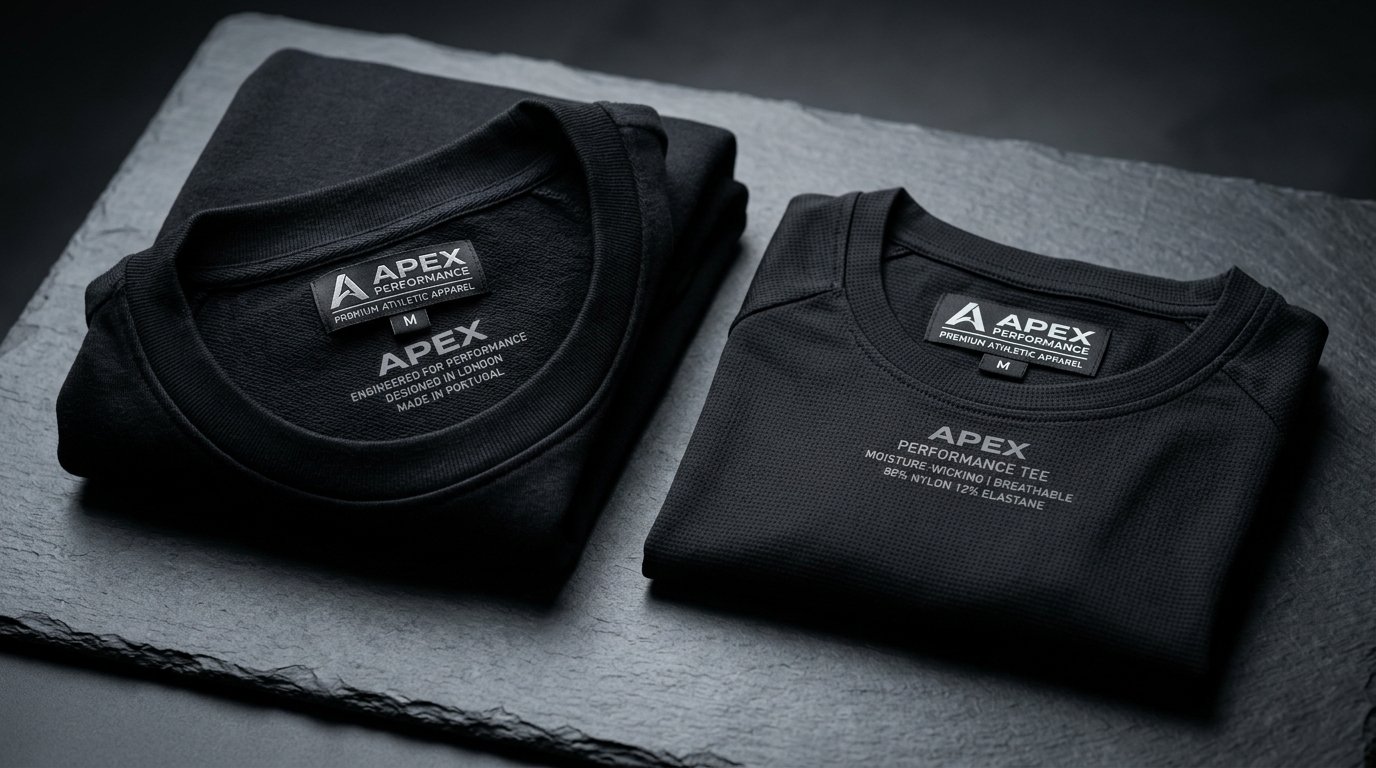
When Private Label Makes Strategic Sense:
- Testing High-Risk Market Concepts: If you are launching a community fitness brand, influencer merchandise line, or university club apparel and need to validate purchase demand within 30 days.
- Restricted Upfront Capital ($1,500 u2013 $3,000): Founders who cannot afford $8,000+ sampling and development budgets can allocate limited resources directly toward Meta and TikTok advertising.
- Standard Silhouette Requirements: If your product line consists of classic crewneck t-shirts, basic workout shorts, and standard hoodies where unique pattern panels offer minimal consumer differentiation.
The Hidden Pitfalls of Private Label:
- Vulnerability to Competitor Duplication: Any rival brand can contact the same catalog supplier and release identical garments with a different logo.
- Inconsistent Dye Lots: When reordering catalog stock months later, suppliers frequently substitute yarn lots, leading to noticeable color variance between production runs.
- Subpar Sizing for Athletic Fits: Factory stock blanks are cut to generic retail fits, frequently resulting in baggy waistlines, loose arm cuffs, and unflattering silhouettes for athletic physiques.
4. In-Depth Analysis: Custom Cut & Sew Manufacturing
Custom Cut & Sew is the manufacturing foundation of tier-one athletic giants like Gymshark, Lululemon, Alo Yoga, and Nike. Every line on the garment exists because your design team specified it in your technical drawings.
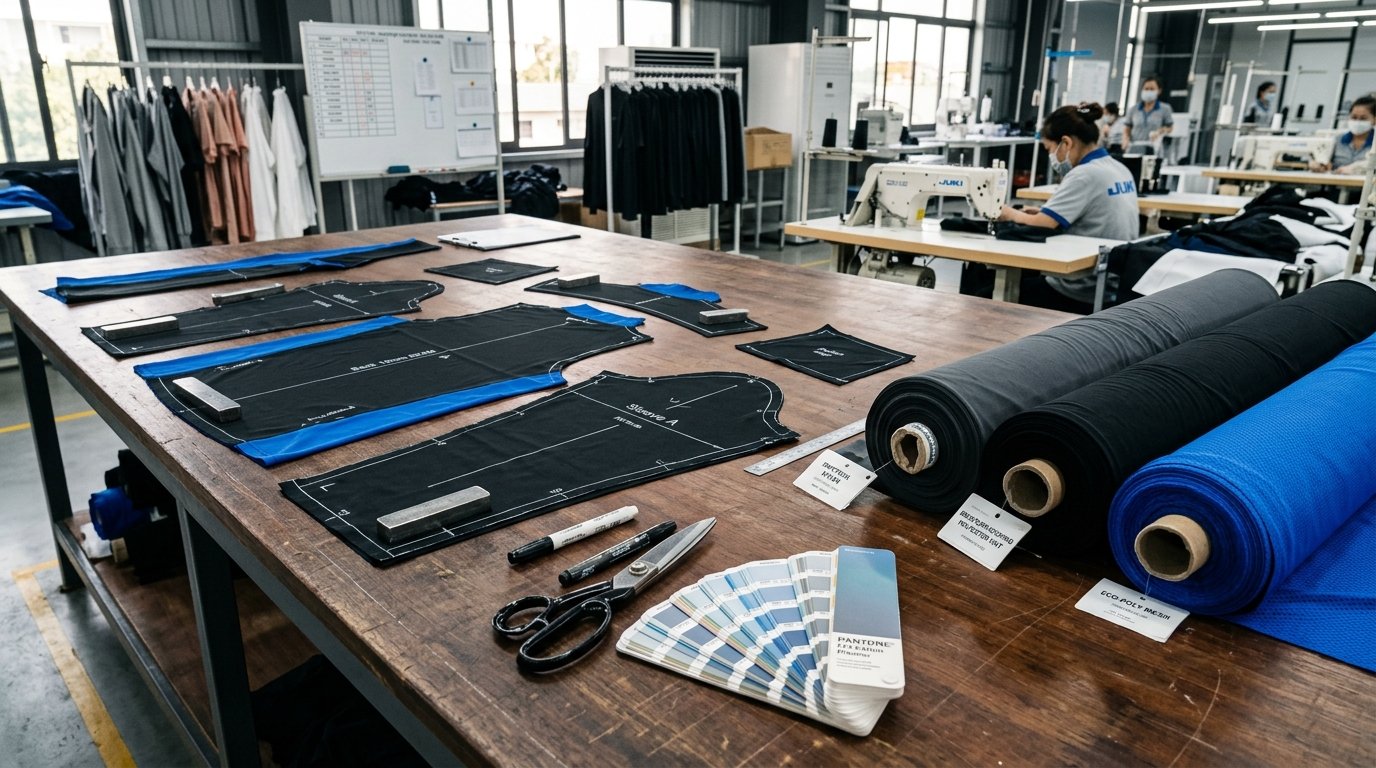
The Competitive Moat of Custom Cut & Sew:
- Complete Intellectual Property (IP) Ownership: Your digital CAD grading patterns belong 100% to your brand. No competitor can purchase your exact silhouette from any supplier.
- Engineered Performance Fabrics: You specify the exact fiber ratiou2014e.g., 78% Recycled Poly / 22% Spandex at 280 GSM with antimicrobial silver-ion wash and moisture-wicking capillary finish.
- Ergonomic Seam Construction: Reinforce high-stress points with flatlock 4-needle stitching, bonded pocket hems, hidden zippered key pockets, and laser-cut ventilation eyelets.
- Superior Profit Margins at Scale: By bypassing middleman catalog distributors and working directly with vertical OEM manufacturers, your Cost of Goods Sold (COGS) drops significantly. A luxury French Terry hoodie retailing for $95.00 costs under $17.50 in factory bulk production.
5. Financial Breakdown: 500 Luxury Gym Hoodies (420 GSM)
To illustrate unit economics, examine the production and profit model for a run of 500 heavyweight luxury athletic hoodies retailing at $85.00 USD:
| Cost & Profit Metric | Private Label Blanks | Sports Outlines Custom Cut & Sew |
|---|---|---|
| Base Garment / Fabric Cost | $21.50 (Catalog markup) | $11.80 (Direct yarn/knit yield) |
| Cut, Make & Trim (CMT Labor) | Included in base | $3.20 (Precision flatlock & assembly) |
| Custom Labels, Badges & Packaging | $3.50 (Re-labeling surcharge) | $1.20 (Woven tag + polybag integrated) |
| Air Freight & Customs (DDP to Door) | $4.50 / unit | $4.20 / unit |
| Total Landed Cost per Hoodie | $29.50 | $20.40 |
| Gross Profit per Unit (@ $85.00 MSRP) | $55.50 (65.2% Margin) | $64.60 (76.0% Margin) |
| Total Batch Gross Profit (500 Units) | $27,750 USD | $32,300 USD (+$4,550 Extra Profit) |
6. The “Bridge” Strategy: How Modern Startups Get Both
In the past, founders faced a binary choice: either buy boring generic blanks or commit $25,000+ to Chinese factories demanding 500-piece minimums.
At Sports Outlines, we pioneered the Hybrid OEM Model from our industrial facilities in Sialkot, Pakistan. We enable fitness brands across the United States, United Kingdom, Australia, Canada, and Germany to achieve Full Custom Cut & Sew at Low MOQs of just 30u201350 pieces per style.
Explore our core manufacturing product categories:
- Custom Team Uniforms & Activewear: Sublimated soccer jerseys, basketball kits, athletic tracksuits, and gym compression rash guards.
- Custom Varsity & Bomber Jackets: Melton wool varsity jackets with genuine leather sleeves, chenille embroidery patches, and luxury quilted linings.
- Heavyweight Streetwear & Casual Apparel: 380u2013480 GSM French Terry hoodies, acid-wash oversized tees, and luxury fleece sweatpants.
7. Frequently Asked Questions (FAQ)
Can I transition from private label to custom cut and sew later?
Yes. Many founders begin with private label blanks for proof-of-concept during their first 90 days. Once customer data confirms which sizes and colors sell fastest, they transition their bestsellers into custom cut & sew to capture an additional 15u201320% in profit margin and protect their silhouette from competitors.
Do I need professional CAD fashion sketches for cut & sew?
No. If you work with Sports Outlines, you can send rough hand sketches, reference garment samples, or mood boards. Our in-house pattern masters will develop your complete digital CAD vector blueprints, measurement charts, and Bill of Materials free of charge with your sampling order. Review our Low MOQ Startup Blueprint for step-by-step guidance.
What is the minimum sampling fee for cut and sew activewear?
Custom cut & sew pre-production samples typically range from $60 to $120 USD depending on technical complexity (e.g., custom sublimation, embroidery patches, or silicone printing). At Sports Outlines, sample development fees are fully credited toward your bulk production invoice once approved.
Ready to Launch Your Custom Activewear Line with Low MOQs?
Bypass expensive middleman catalog suppliers. Partner directly with Sports Outlines in Sialkot, Pakistan. Whether you require private label branding on quick-turn garments or bespoke custom cut & sew manufacturing at 30u201350 pieces per style, our engineering team is standing by to bring your apparel vision to life.