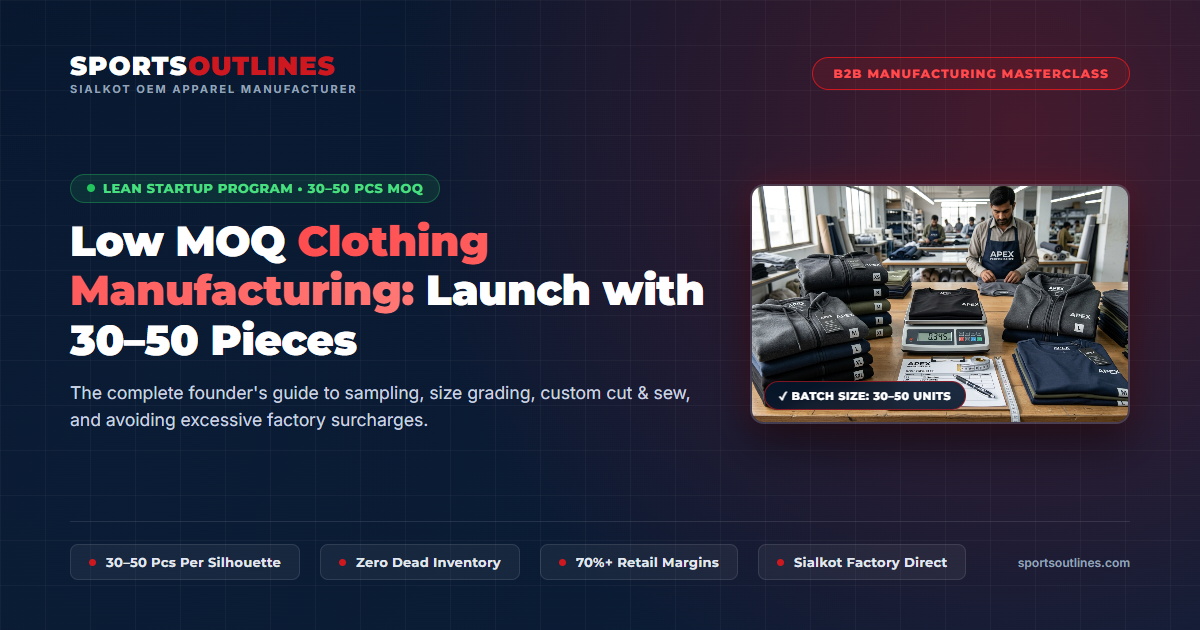
For decades, the global apparel industry operated on an unbending, punitive principle: if you cannot commit to 500 or 1,000 pieces per style, overseas factories will not return your emails. Traditional textile mills and cut-and-sew mega-factories in East Asia engineered their entire assembly lines around massive container shipments, effectively locking out innovative fitness startups, boutique gym chains, and emerging activewear designers.
In 2026, the economics of performance apparel have radically transformed. Driven by agile supply chain automation, digital CAD marker planning, and direct-to-consumer (DTC) lean inventory methodologies, modern brands are proving that you do not need $40,000 in upfront production capital to build a premium athletic clothing label. By working with a specialized low MOQ clothing manufacturer, you can launch custom cut-and-sew collections with as few as 30 to 50 pieces per silhouetteu2014achieving retail-grade finishing, custom branding, and 65% to 75% gross margins without sinking your working capital into dead inventory.
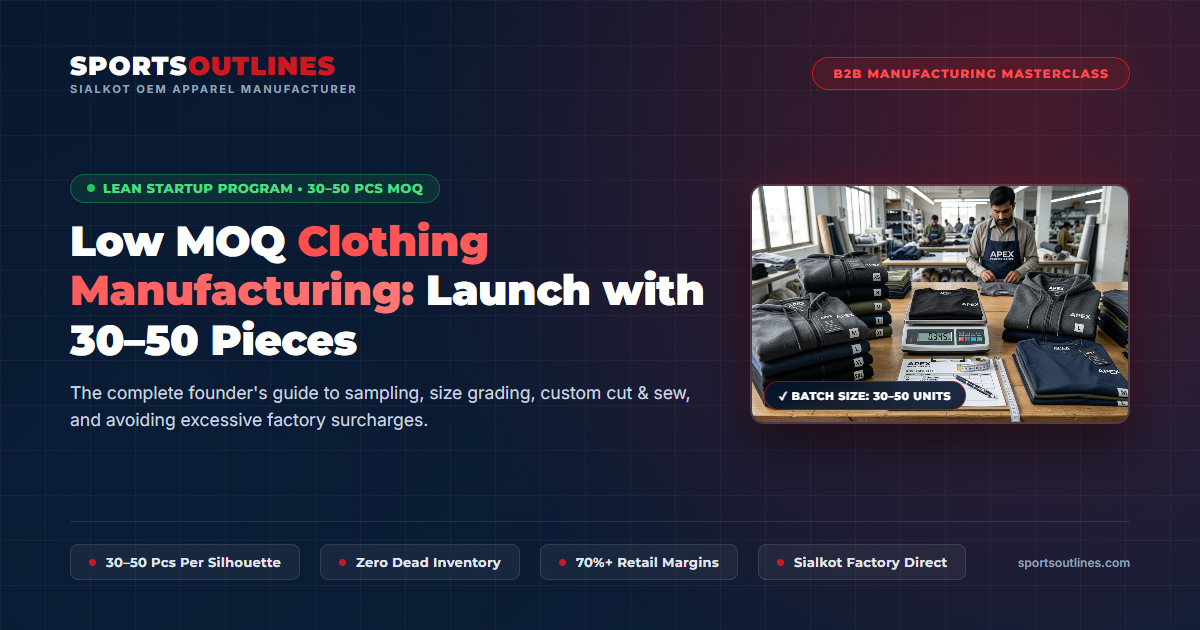
- Inventory Risk Elimination: Committing to 30u201350 units per style allows you to test market demand, gauge customer color preferences, and validate sizing without sitting on thousands of unsold garments.
- Cash Flow Preservation: A full 3-style startup collection (e.g., performance tee, training shorts, and hoodie) requires approximately $1,800u2013$3,200 in manufacturing capital instead of $25,000+.
- True Customization: Low MOQ manufacturing does not mean settling for blank promotional t-shirts. With OEM partners in Sialkot, Pakistan, you get custom fabric blends (e.g., 80/20 poly-spandex), Pantone-matched trims, woven neck tags, and custom size grading charts.
1. Why Traditional Factories Demand 500+ Pieces (The Industrial Bottleneck)
To negotiate successfully with clothing manufacturers, you must understand why traditional factories reject small orders. Manufacturing costs in apparel production do not scale linearly; they are heavily front-loaded during the pre-production setup phase:
- Fabric Milling Minimums: Commercial textile mills require minimum yarn dye lots (typically 300 to 500 kilograms of raw yarn per color bath). When a factory produces 50 t-shirts, they only consume roughly 12 to 15 kg of fabric, leaving a massive surplus of unusable custom-dyed yardage.
- Digital CAD Pattern Grading & Marker Setup: Creating digital grading charts across 5 sizes (XS, S, M, L, XL) and laying out pattern markers on digital cutting tables requires 4 to 6 hours of skilled engineering time whether the factory cuts 30 pieces or 3,000 pieces.
- Machine Setup & Line Calibration: Calibrating industrial 4-needle 6-thread flatlock stitching machines, thread tensioners, automated laser cutting beds, and heat-press temperature zones requires downtime. Factories lose money if an operator configures an assembly line only to sew 30 garments in two hours.
How Specialized Low MOQ OEM Factories Solve This: At Sports Outlines, our Sialkot manufacturing hub utilizes dedicated flexible production cells (mini-lines) and maintains continuous in-stock inventories of pre-tested, high-grade athletic textiles (such as 180 GSM micro-interlock polyester, 240 GSM 4-way stretch poly-spandex, and 420 GSM heavy French Terry). This allows emerging brands to skip custom mill minimums and produce high-performance sportswear starting at 30 pieces per style.
2. How to Structure a 30 to 50 Piece Production Run: Sizing & Ratio Science
The most common mistake first-time activewear founders make with low MOQ manufacturing is spreading their units too thin across too many sizes and colorways. If you order 50 pieces and split them across 5 colors and 6 sizes, you end up with fewer than 2 units per SKU, resulting in immediate stockouts of popular sizes and unfulfilled customer orders.
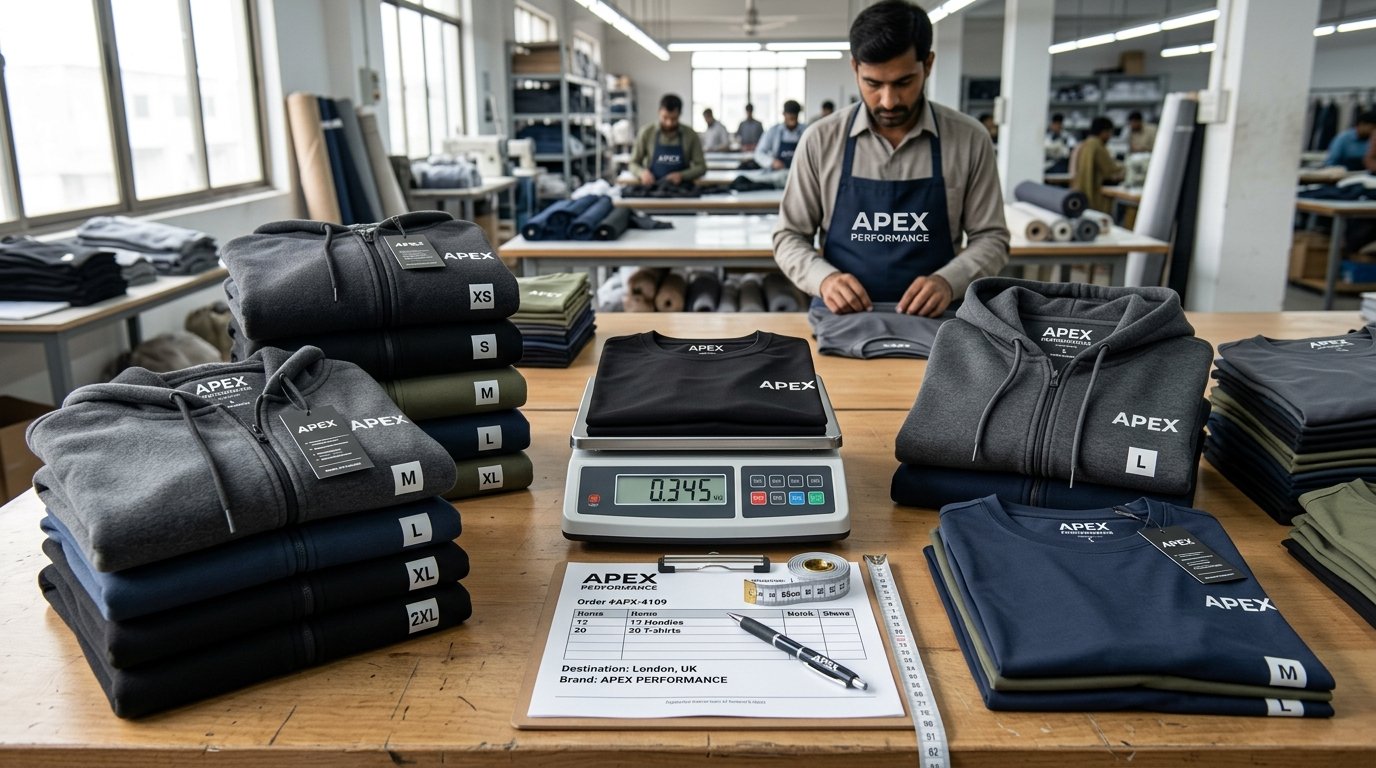
For western fitness markets in the United States, United Kingdom, Australia, and Canada, historical retail sales data shows that Medium (M) and Large (L) represent over 60% of total athletic wear sales volume.
3. Complete Cost Matrix: Low MOQ (30u201350 Units) vs Bulk Production (250u20131,000 Units)
Many startup founders falsely assume that because a 50-piece run has a higher unit manufacturing price than a 500-piece run, it is financially disadvantageous. In reality, total capital risk is what determines startup survival. Consider the following real-world cost breakdown for an athletic custom heavyweight training hoodie (420 GSM French Terry with custom embroidery, woven labels, and custom aglets):
The Mathematical Verdict: While producing 1,000 units reduces your unit cost from $21.80 down to $12.90, it forces you to risk **$14,750** in hard capital. If a colorway underperforms or your sizing runs slightly small, you absorb an catastrophic $8,000u2013$10,000 loss in dead stock. In contrast, producing 50 units requires only **$1,365** in total capital, generates **$4,250** in gross revenue at an $85 retail price, and leaves you with **$2,885 in pure gross profit** to immediately reinvest in reorders!
4. Stock Fabrics vs. Custom Milling: How to Avoid Minimum Dye Surcharges
In custom garment manufacturing, fabric represents 50% to 65% of your total unit production cost. Understanding the difference between mill-run custom dyeing and factory in-stock technical fabrics is the single most important tactic to prevent massive low-MOQ surcharges:
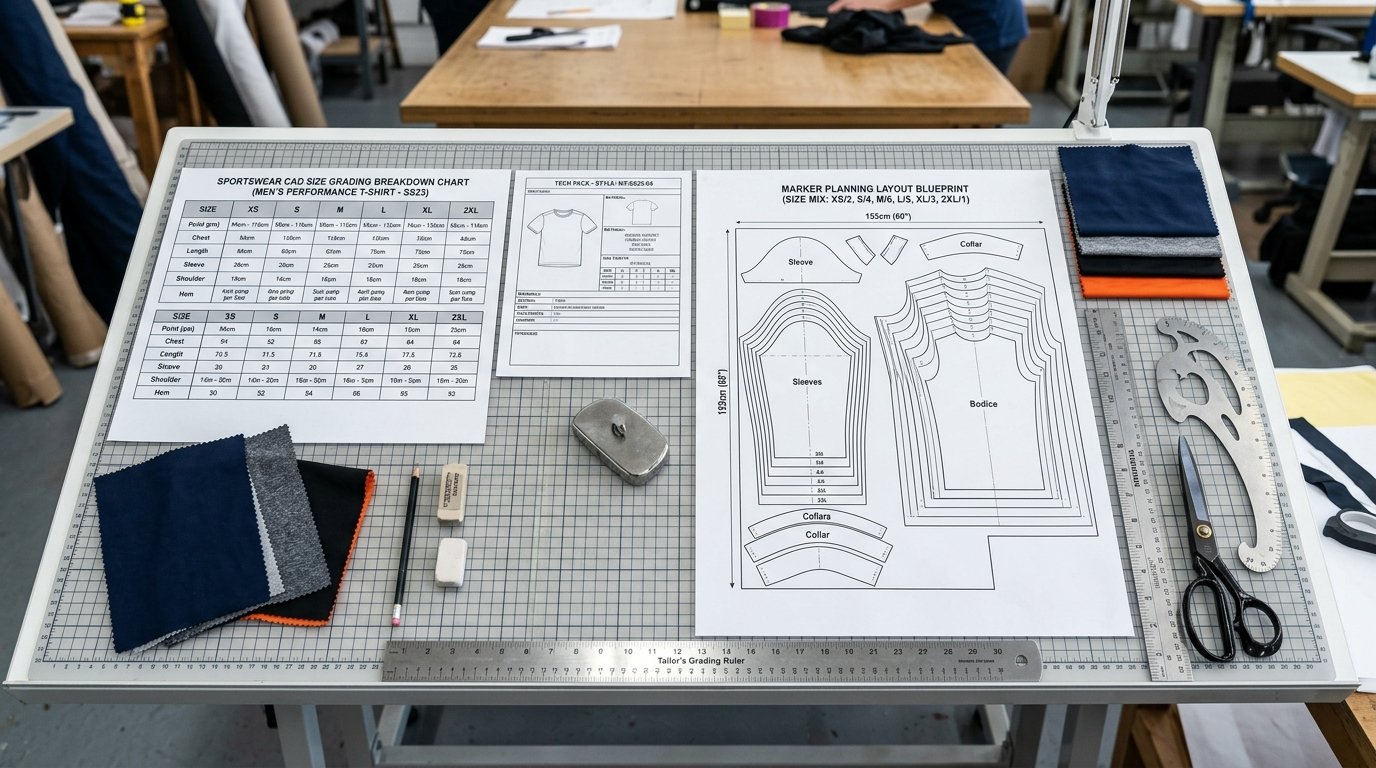
- Mill-Run Custom Fabric (Avoid for Sub-200 pcs): When you request a rare custom Pantone shade (e.g., custom dusty sage green) on an un-stocked proprietary knit, the dye mill must charge a “Short-Run Dye Fee” (typically $250u2013$450 per color bath) because their 500kg vat is run at only 5% capacity.
- Factory In-Stock Technical Fabrics (Recommended Strategy): Premium OEM manufacturers maintain commercial inventory rolls in essential athletic colorways: True Black, Deep Navy (#07162c), Gunmetal Heather Gray, Chalk White, Army Olive, and Crimson Red. By selecting from our verified inventory rolls of 4-way stretch poly-spandex or French Terry, you pay zero dyeing surcharges, your order starts cutting immediately, and your lead times shrink by 18 days!
5. Five Sourcing Pitfalls That Destroy Startup Apparel Budgets
Sourcing overseas can be fraught with hidden expenses if you do not know where suppliers hide extra charges. Watch for these five traps when evaluating low MOQ quotes:
1. The “Free Sample” Trap
Unscrupulous brokers promise free samples, but bake $250 in “pattern creation fees” and $120 in courier fees into the invoice. Legitimate factories charge fair sample development fees (e.g., $50u2013$80) and credit them back once bulk production starts.
2. Un-Graded Flat Patterns
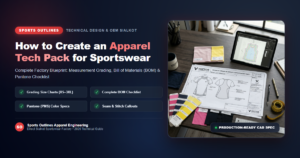
Cheap vendors will cut size Small and then simply scale the entire pattern outward uniformly. This results in Large and XL shirts with giant armholes and stretched necklines. Demand proper CAD grading based on certified Apparel Tech Packs.
3. Volumetric Shipping Shocks
Heavy athletic hoodies and puffer jackets have high dimensional volume. If cartons are not vacuum-packed prior to courier handover, you will pay double in DHL/FedEx volumetric freight rates.
4. Phantom Trim Minimums
Some factories quote 50 garments, but require 1,000 pieces minimum for custom silicone zip pullers or woven tags. Sports Outlines stocks generic premium trims and produces custom heat-seal labels at low volume.
6. The 6-Step Lean Manufacturing Workflow at Sports Outlines
We have built an agile, vertically integrated OEM manufacturing pipeline in Sialkot, Pakistan, specifically calibrated for emerging brands and startup clothing labels:
- Tech Pack Review & Design Engineering (Day 1u20132): Our technical apparel designers examine your sketches, reference garments, and measurement specs. If you don’t have a tech pack, we assist in compiling your full Bill of Materials (BOM).
- Prototype Development & Lab Sampling (Day 3u20138): We cut and sew an initial physical prototype incorporating your chosen fabric weight, seam stitching, and branding placement. Detailed high-res video and physical courier dispatch guarantee full approval before bulk cutting.
- Digital Marker Planning & Precision Cutting (Day 9u201311): Using computerized CAD cutting beds, we optimize fabric utilization to achieve zero scrap waste, protecting your per-unit pricing.
- Cellular Assembly & Flatlock Construction (Day 12u201316): Skilled artisans assemble your 30u201350 units utilizing industrial 4-needle 6-thread machines, ensuring heavy-duty burst strength across all activewear seams.
- AQL 2.5 Quality Inspection & Trimming (Day 17u201318): Every single garment undergoes a 100% manual check: thread trimming, measurement tolerance auditing (±0.5 cm), fabric tension testing, and iron pressing.
- Express DDP Air Delivery (Day 19u201324): Vacuum-packed and boxed garments are shipped via DHL or FedEx Express directly to your commercial doorstep in the USA, UK, Australia, or Europe with all customs clearance handled.
7. Frequently Asked Questions (FAQ)
What is the absolute minimum order quantity at Sports Outlines?
Our standard low MOQ program begins at 30 to 50 pieces per style/silhouette. For full custom cut-and-sew orders, you can split this quantity across 4 to 5 sizes (e.g., S, M, L, XL).
Can I split a 50-piece run across multiple colorways?
We recommend ordering 50 pieces in a single core color (like Black or Navy) for maximum cost efficiency. However, if using our in-stock fabric rolls, we can accommodate a 25/25 color split for a small line-change handling fee.
Do you provide custom neck tags and polybags with 30-piece orders?
Yes! We provide complete retail-ready custom branding including high-definition heat-seal neck labels, custom woven hem tags, barcoded hangtags, and custom branded zipper polybags.
How long does sample development and bulk delivery take?
Physical sample prototypes are manufactured in 7 to 10 working days. Once approved, bulk batch production of 30u2013100 pieces takes 12 to 16 working days, with 4u20136 days for express DHL air courier transit.
Ready to Launch Your Custom Sportswear Line with 30u201350 Pieces?
Skip the middlemen and high-MOQ barriers. Partner directly with Sports Outlines in Sialkot, Pakistan for precision custom cut-and-sew manufacturing, certified fabric yields, and fast turnaround times.