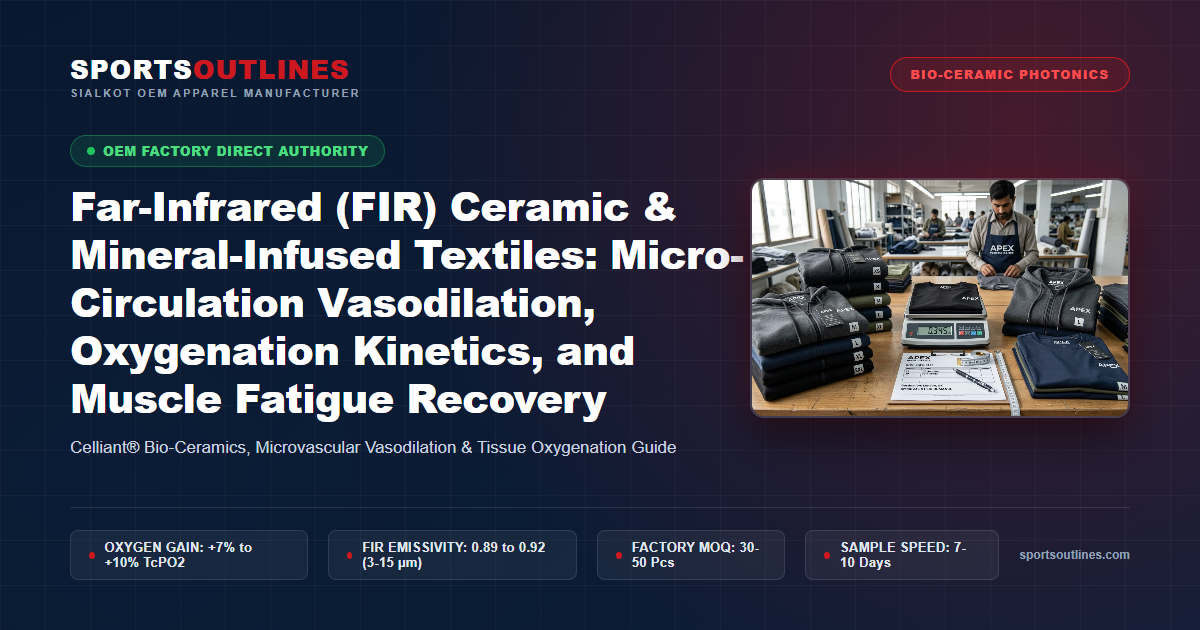
Far-Infrared (FIR) Ceramic & Mineral-Infused Textiles: Micro-Circulation Vasodilation, Oxygenation Kinetics, and Muscle Fatigue Recovery

In the ultra-competitive landscape of athletic performance and post-exercise recovery, sports scientists have long recognized that rapid metabolic restoration depends primarily on capillary microcirculation and cellular oxygen availability. Traditional recovery…
Continue ReadingFar-Infrared (FIR) Ceramic & Mineral-Infused Textiles: Micro-Circulation Vasodilation, Oxygenation Kinetics, and Muscle Fatigue Recovery

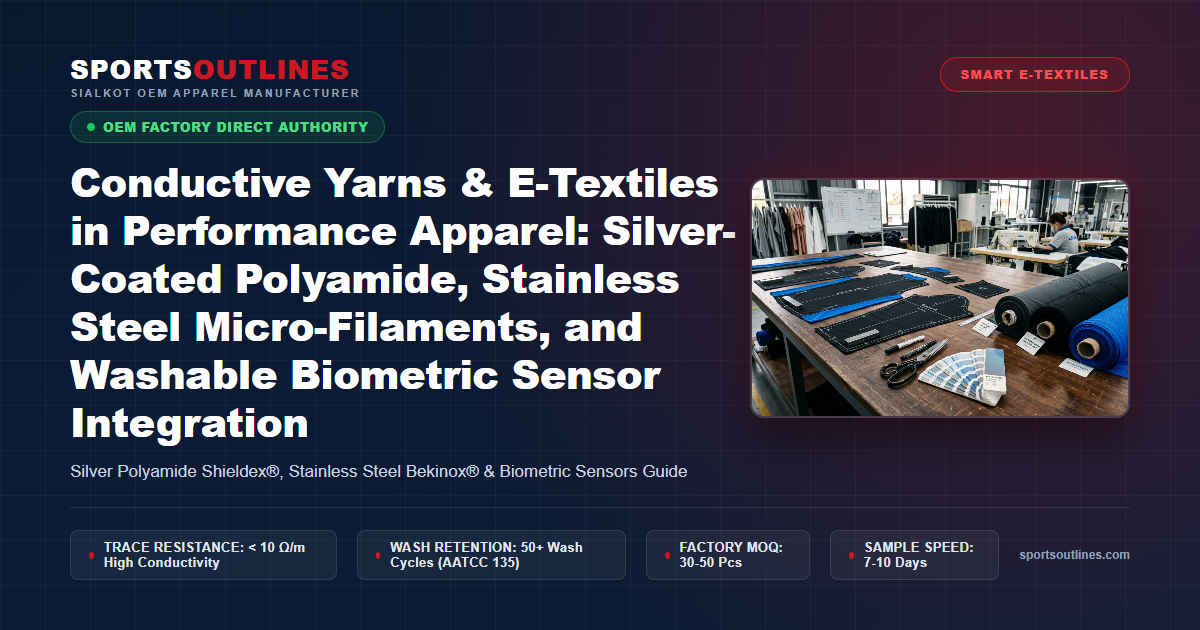
Conductive Yarns & E-Textiles in Performance Apparel: Silver-Coated Polyamide, Stainless Steel Micro-Filaments, and Washable Biometric Sensor Integration

The rapid convergence of sports science, biometric data telemetry, and technical apparel manufacturing has catalyzed a monumental shift in activewear engineering: the transition from rigid, wearable accessories (such as chest…

Continue ReadingConductive Yarns & E-Textiles in Performance Apparel: Silver-Coated Polyamide, Stainless Steel Micro-Filaments, and Washable Biometric Sensor Integration

Phase Change Materials (PCM) & Microencapsulated Paraffin in Activewear: Outlast® Thermoregulation, Latent Heat Enthalpy, and Dynamic Skin Microclimates

Traditional activewear thermoregulation operates on a fundamentally reactive paradigm: as an athlete engages in intense physical exertion, core metabolic heat generation causes body temperature to rise, triggering cutaneous vasodilation and…

Continue ReadingPhase Change Materials (PCM) & Microencapsulated Paraffin in Activewear: Outlast® Thermoregulation, Latent Heat Enthalpy, and Dynamic Skin Microclimates

Life Cycle Assessment (LCA) & Higg MSI Carbon Accounting in Apparel Manufacturing: Scope 1, 2, 3 Footprints, Product Environmental Footprint (PEF), and Sialkot Eco-Factory Standards

For decades, sustainability in the sportswear industry was dominated by aspirational marketing narratives, self-declared eco-labels, and vague claims of "planet-friendly" manufacturing. Today, that era of unchecked rhetoric has decisively ended.…

Continue ReadingLife Cycle Assessment (LCA) & Higg MSI Carbon Accounting in Apparel Manufacturing: Scope 1, 2, 3 Footprints, Product Environmental Footprint (PEF), and Sialkot Eco-Factory Standards

Mass Balance Chain of Custody & ISCC PLUS Certification in Sustainable Sportswear: Chemical Attribution, Co-Processing Audits, and Greenwashing Defense

As the performance apparel industry accelerates its transition toward decarbonization, global sportswear brands face a formidable chemical and infrastructural bottleneck. While consumers and regulatory authorities demand garments synthesized from renewable…

Continue ReadingMass Balance Chain of Custody & ISCC PLUS Certification in Sustainable Sportswear: Chemical Attribution, Co-Processing Audits, and Greenwashing Defense

Agricultural Waste Fibers in Athleisure (Agraloop™ & Circular Natural Synthetics): Oilseed Hemp, Banana Peel, Pineapple Leaf (Piñatex®), and Food Crop Residue Yarn Blending

Every year, global food and oilseed agricultural systems generate an estimated 250 million tons of post-harvest crop residues. Across major agricultural basins in South Asia, Southeast Asia, and the Americas,…

Continue ReadingAgricultural Waste Fibers in Athleisure (Agraloop™ & Circular Natural Synthetics): Oilseed Hemp, Banana Peel, Pineapple Leaf (Piñatex®), and Food Crop Residue Yarn Blending

Mycelium Leather & Bio-Composite Synthetics in Performance Outerwear & Footwear Uppers: Fungal Hyphae Growth Kinetics, Tensile Tear Resistance, and Micro-Porous Thermal Buffering

For over a century, athletic equipment and performance outerwear have relied on bovine leather and synthetic faux leathers to satisfy high-abrasion, weather-resistant requirements. However, both legacy materials present severe ecological…

Continue ReadingMycelium Leather & Bio-Composite Synthetics in Performance Outerwear & Footwear Uppers: Fungal Hyphae Growth Kinetics, Tensile Tear Resistance, and Micro-Porous Thermal Buffering

Seaweed-Derived Biopolymers & Kelp Yarns (Keel Labs / Kelsun™) in Activewear: Alginate Wet Spinning, Carbon-Negative Marine Biomass, and Breathable Technical Knits

As the performance apparel industry confronts the environmental dead-end of petrochemical synthetics and water-intensive terrestrial agriculture, material science has turned to the world's most productive marine ecosystems: kelp forests. Terrestrial…

Continue ReadingSeaweed-Derived Biopolymers & Kelp Yarns (Keel Labs / Kelsun™) in Activewear: Alginate Wet Spinning, Carbon-Negative Marine Biomass, and Breathable Technical Knits

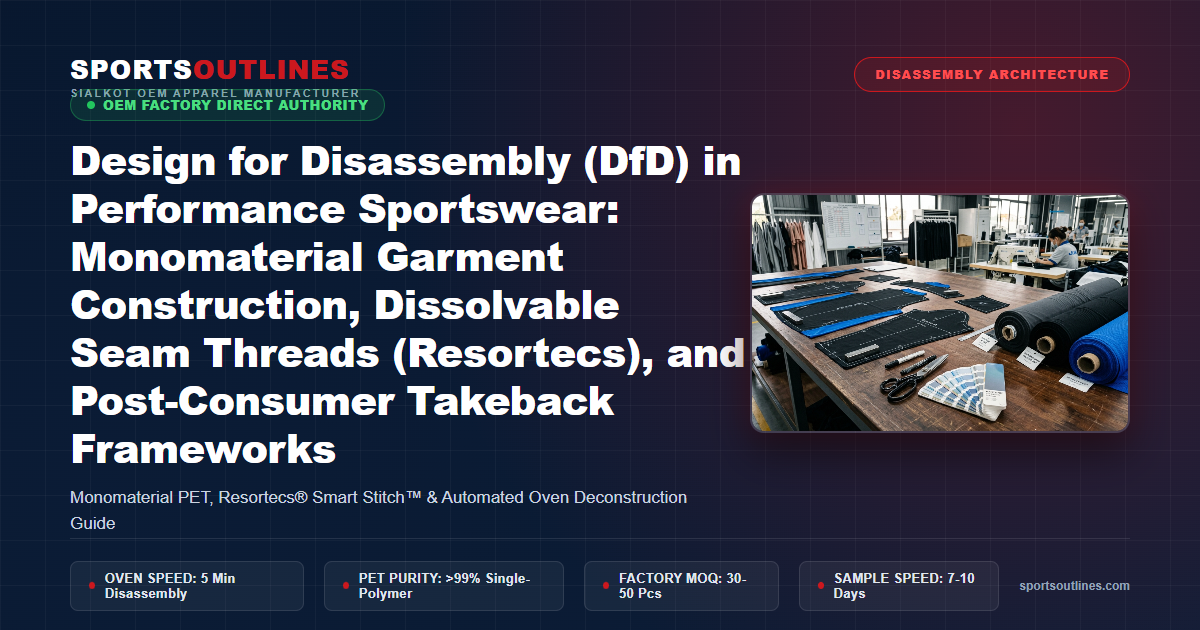
Design for Disassembly (DfD) in Performance Sportswear: Monomaterial Garment Construction, Dissolvable Seam Threads (Resortecs), and Post-Consumer Takeback Frameworks

For over a generation, athletic apparel design has been driven by an engineering obsession with multi-material performance hybridity. Technical sportswear designers routinely pair moisture-wicking polyester torso panels with high-spandex side…

Continue ReadingDesign for Disassembly (DfD) in Performance Sportswear: Monomaterial Garment Construction, Dissolvable Seam Threads (Resortecs), and Post-Consumer Takeback Frameworks

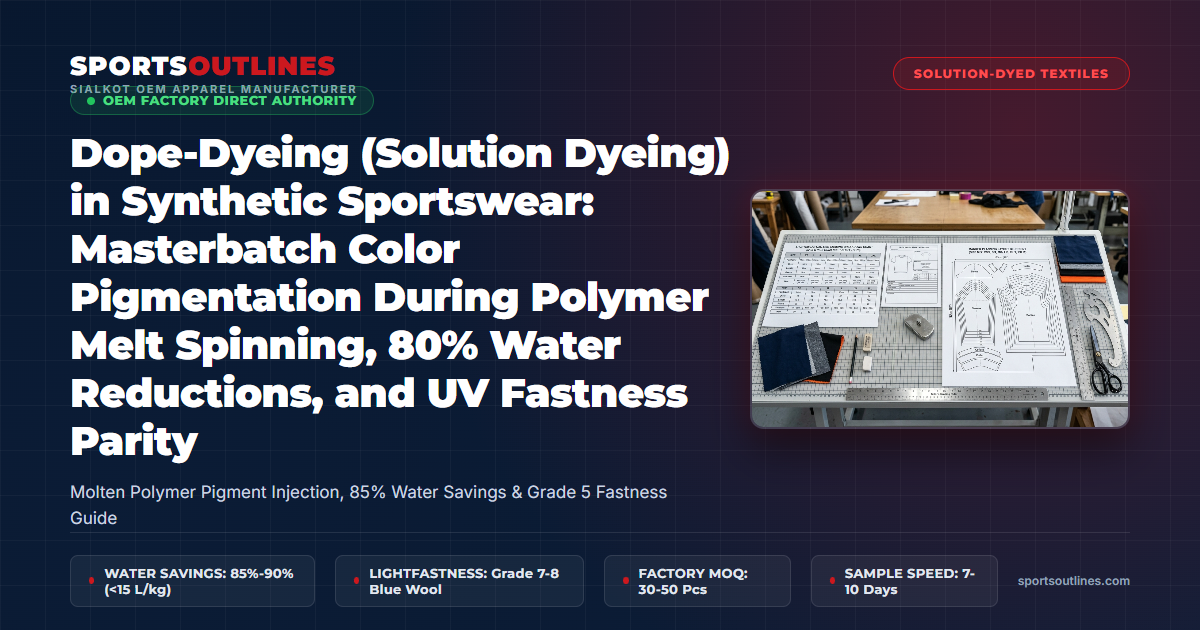
Dope-Dyeing (Solution Dyeing) in Synthetic Sportswear: Masterbatch Color Pigmentation During Polymer Melt Spinning, 80% Water Reductions, and UV Fastness Parity

In the industrial manufacturing of athletic apparel, the traditional wet processing and dyeing stage represents by far the most resource-intensive, chemically hazardous, and carbon-heavy node of the entire supply chain.…

Continue ReadingDope-Dyeing (Solution Dyeing) in Synthetic Sportswear: Masterbatch Color Pigmentation During Polymer Melt Spinning, 80% Water Reductions, and UV Fastness Parity